Ignacio Sánchez Abenante wins Rijksmuseum Migelien Gerritsen Thesis Award 2026
16 October 2026
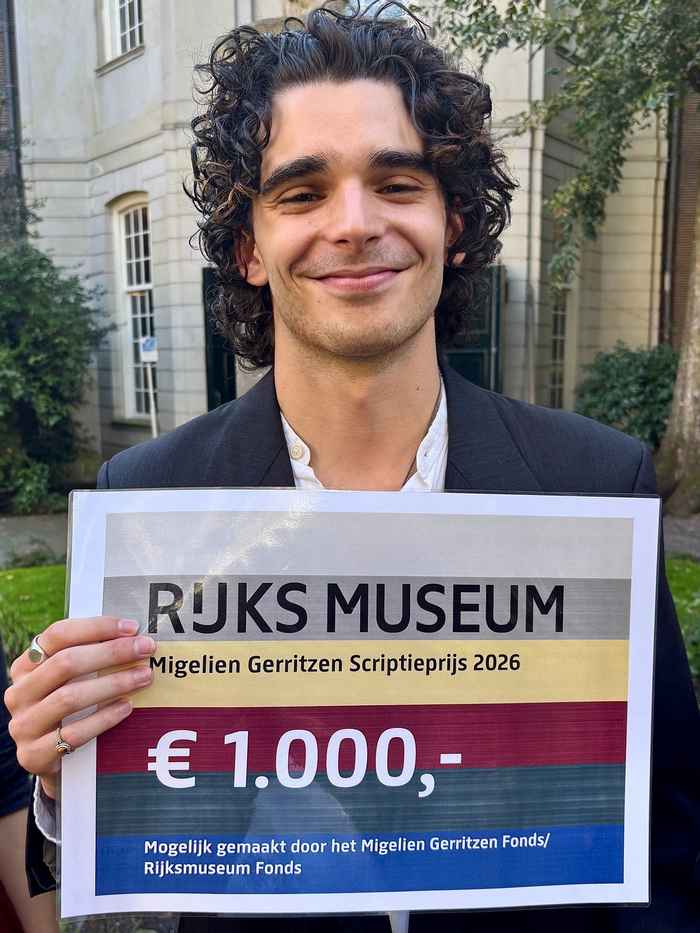
The jury selected Sánchez Abenante for his thorough experimental study into the limitations of a widely used technique for detecting Egyptian blue pigment. The other four nominees for the Migelien Gerritsen Thesis Award were Alicia Koch, with a study on identifying original silver chains in functional objects from the Low Countries dating from 1500 to 1800; Eva Sol, with research into the architectural finishes of a post-war Hansaviertel residential tower in Berlin; Sophia Lee, with a study of Palembang lacquerware from Sumatra, Indonesia; and Stephanie Sailer, with an investigation into a rare reverse glass painting by Jacques Daguerre.
Sánchez Abenante's research focused on the detectability of Egyptian blue using Visible-Induced Luminescence (VIL) imaging, a standard technique for detecting this pigment. The research was prompted by negative VIL imaging results in parts of the Book of the Dead of Qenna, where other analytical techniques confirmed the presence of Egyptian blue. Through an extensive mock-up study, Sánchez Abenante demonstrated that several factors can suppress the detection of the pigment's near-infrared photoluminescence. The most extreme effect was observed with carbon-based materials, where a concentration of just 10% resulted in a complete loss of detectable luminescence. The study demonstrates the limitations of identifying Egyptian blue using this technique.
Rijksmuseum-Migelien Gerritsen Thesis Award
Since 2013, the Rijksmuseum has awarded the Migelien Gerritsen Thesis Award to a Master's student in Conservation and Restoration of Cultural Heritage at the University of Amsterdam. The award consists of a cheque worth €1,000. The winner is encouraged to publish the results of their research.
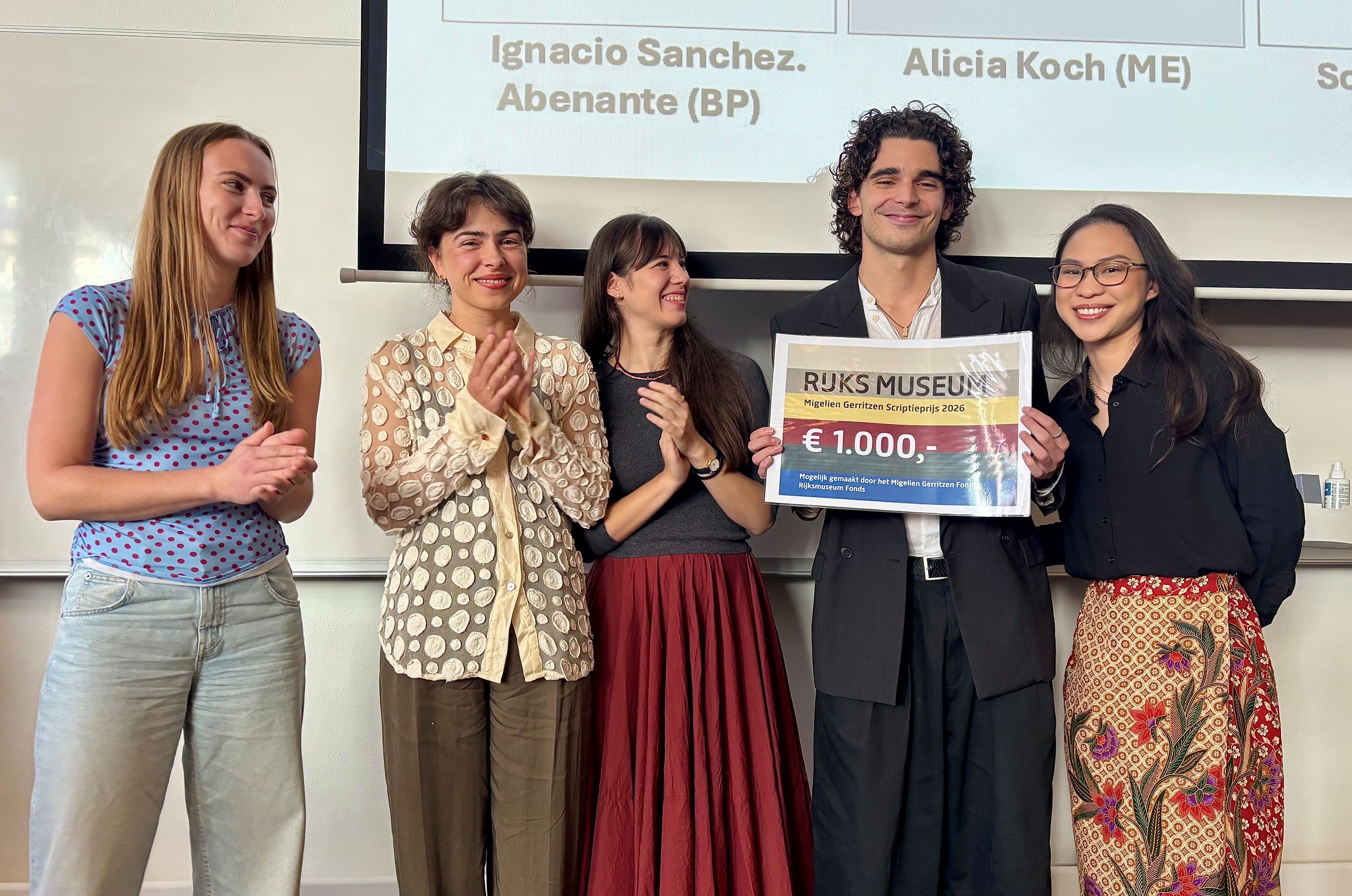
The award was initiated by the Migelien Gerritsen Fund/Rijksmuseum Fund. Established in memory of Migelien Gerritsen through a generous bequest, the fund supports educational projects in conservation, restoration and technical art history.
Conservation and restoration at the UvA
The University of Amsterdam offers the only conservation-restoration programme in the Netherlands that meets European standards. This interdisciplinary Master’s programme is aimed at students with a passion for cultural heritage who wish to combine theory and practice. The educational trajectory begins with a two-year Master's programme in Conservation and Restoration of Cultural Heritage, comprising nine conservation specialisations and a track in Technical Art History. After successfully completing the Master's programme, conservation students continue their training through the two-year Advanced Professional Programme.